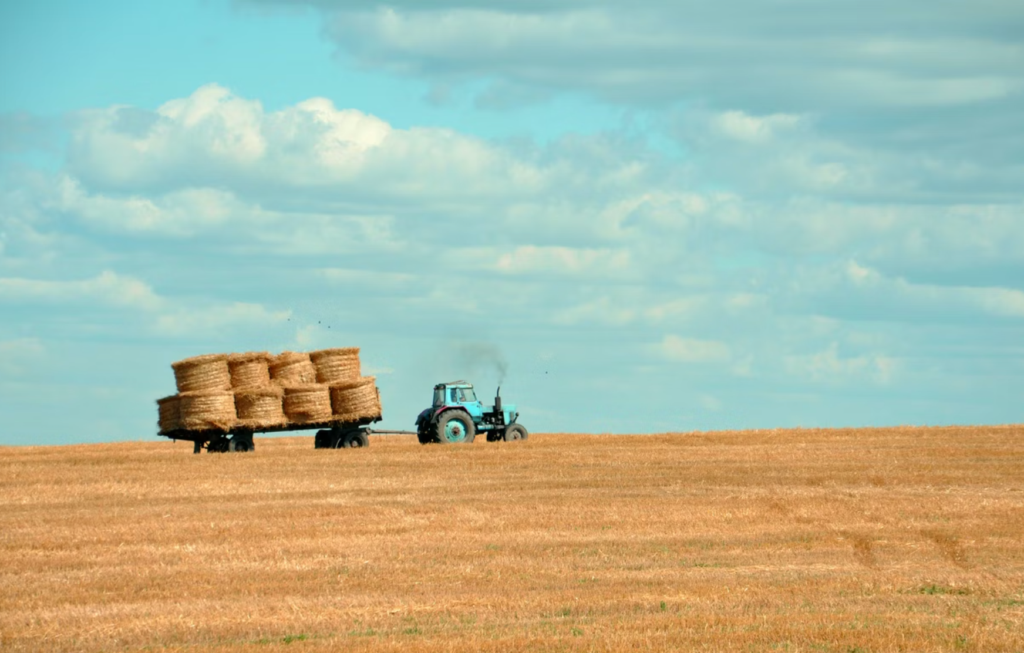
Glyphosate, Agricultural Productivity, and Food Security: A Risk Based Policy Assessment in the Context of Modern Food Systems 

Executive Summary  Glyphosate is among the most consequential agricultural technologies introduced in the past halfcentury. Its widespread adoption has reshaped weed management, reduced tillage, stabilized yields, and lowered production costs across much of global agriculture. At the same time, glyphosate has become a focal point of public controversy, driven by hazardbased classifications, litigation, and advocacy campaigns that often […]

Glyphosate, Agricultural Productivity, and Food Security: A Risk Based Policy Assessment in the Context of Modern Food Systems  Learn More »

Will the US Senate Stall Much-Needed Permitting Reforms?

In a last-gasp flurry of activity, the 119th House of Representatives in December moved forward a bevy of bills aimed at shortening the time frame and the costs required for federal permits for infrastructure projects, many of which are deemed vital to national security. That’s the good news. The bad news is that these bills

Will the US Senate Stall Much-Needed Permitting Reforms? Learn More »

A Religious Spin on Climate Change

Watch out, world — here comes the God-spin on climate change inspired by the UN’s 30th Conference of the Parties (COP30). COP30 wrapped up last month with an offering of the usual suspects: socialist solutions for acolytes to advocate. According to UN Climate Change Executive Secretary Simon Stiell, during the “high-level closing event at COP30 in Belém, Brazil,

A Religious Spin on Climate Change Learn More »

A Nuclear Resurgence, But Major Obstacles Remain

The first commercial nuclear plant started operation at Calder Hall in England in 1956. By 1970, reactors were in construction around the world. Many predicted that atomic energy would generate most of the world’s power by 2000. In 1973, President Richard Nixon stated, “It is estimated that nuclear power will provide more than one-quarter of the

A Nuclear Resurgence, But Major Obstacles Remain Learn More »

Latest Science Further Exposes Lies About Rising Seas 

It’s all too predictable: A jet-setting celebrity or politician wades ceremoniously into hip-deep surf for a carefully choreographed photo op, while proclaiming that human-driven sea-level rise will soon swallow an island nation. Of course, the water is deeper than the video’s pseudoscience, which is as shallow as the theatrics.  The scientific truth is simple: Sea levels

Latest Science Further Exposes Lies About Rising Seas  Learn More »

“Green” Objectives Stifle Economic Growth in the Developing World

The following is a guest article by Ronald Stein, Dr. Robert Jeffrey, and Olivia Vaughan. About 80% of the globe’s 8 billion people live in less developed countries. Much of Africa and South-East Asia are prime examples of this, as are the Pacific Ocean Island states. The people in those countries might live on less

“Green” Objectives Stifle Economic Growth in the Developing World Learn More »

Banana Waste for Synfuels Has An Increasing Appeal

Scientists from the United Kingdom’s Northumbria University (located in historic Newcastle, once the center of the British coal industry) and their partners in Pakistan are converting banana waste into eco-friendly textiles and clean energy, according to Shubhangi Dua, writing in Interesting Engineering. According to the report, banana farming in Pakistan creates 80 million tons of agricultural waste that

Banana Waste for Synfuels Has An Increasing Appeal Learn More »

EU Farmers Protest Green Policies’ Threat to Greenest Lands

Europe’s picturesque landscapes, adorned with sprawling croplands and pastures, have long been part of the continent’s agrarian identity. However, a wave of farmer protests has intruded on this peaceful scene and extended into cities.   From the rolling hills of France to the windswept plains of Poland, farmers have driven their tractors onto the streets,

EU Farmers Protest Green Policies’ Threat to Greenest Lands Learn More »