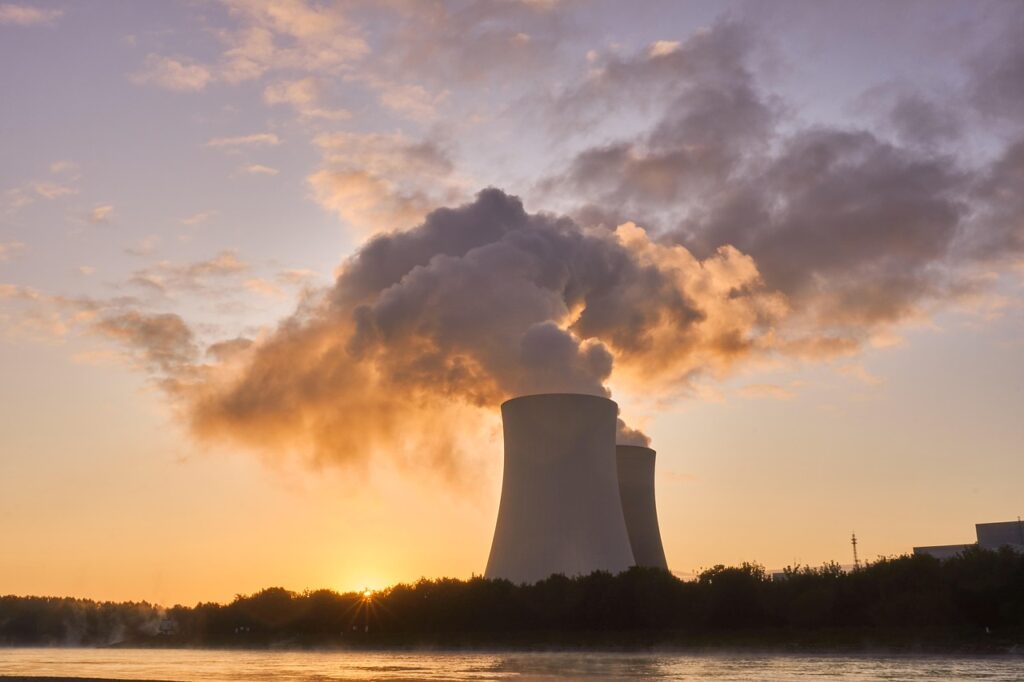
According to noted stock trader Ross Givens, many investors are pouring money into nuclear energy stocks that may never deliver. Innovative generation IV and V reactor designs remain unapproved by a slow-moving federal government. Yet investors remain hopeful that this bottleneck will soon be removed.
In the early years of America’s nuclear power industry, the Atomic Energy Commission was favorable to innovative technology and bullish on nuclear’s ability to power the future.
One minor incident, however, enabled the anti-nuclear crowd to have the AEC replaced by a Nuclear Regulatory Commission whose mandate switched from using nuclear energy to protecting Americans from nuclear radiation. Their approach predated President Obama’s strategy for bankrupting the coal industry – regulations to make nuclear reactors so expensive that anyone trying to go nuclear would go bankrupt.
President Trump in May issued an executive order calling for major reforms to the NRC, whose current structure and staffing, he said, are “misaligned with the Congress’ directive that the NRC shall not unduly restrict the benefits of nuclear power.” He wants an NRC that promotes expedited processing of license applications and adoption of innovative technology.
One tactic used by the NRC is the $300 per hour charge to applicants for reviewing applications. Coupled with a razor-like ability to “discover” separate “serious flaws” one at a time, the NRC process adds direct and indirect costs that discourage applicants.
The Vogtle units 3 and 4 in Georgia, the only two new U.S. reactors in the 21st century, were supposed to cost about $14 billion from design to operational status but ended up costing $36.8 billion – plus revenues lost to the delayed approvals. Permitting for Tennessee’s Watts Bar unit 2, which became operational in 2016, began in 1972.
The White House believes NRC staffers have disregarded the severe domestic and geopolitical costs of risk aversion overkill – including safety models that, without sound scientific basis, claim there is no safe threshold of radiation exposure. This forces nuclear plants to protect against radiation below naturally occurring levels.
While lauding the White House’s goal of jumpstarting a nuclear renaissance, nuclear power advocate Steven Curtis says that putting new wine into the old NRC wineskin is a recipe for failure. So is throwing federal dollars at nuclear startups rather than merely removing the regulatory barriers and letting the market decide winners and losers.
Today, says Curtis, 60 to 70 privately owned advanced design nuclear power startups have a combined capital investment exceeding $20 billion, yet the regulations under which they receive approval for both construction and operation are tied up in red tape.
NRC regulations require nuclear facilities, like mining operations, to set aside estimated costs for decommissioning the reactor and long-term storage of nuclear waste. No one has even been harmed from a U.S nuclear accident, yet neither oil and gas, nor wind and solar facilities, nor any other U.S. industry, is so rigidly overregulated.
Shortening permitting times for nuclear reactors is a step in the right direction, Curtis says, but that alone will not bring the cost of nuclear energy to competitive levels. There is a solution, says Curtis, that can turn a $50 billion bill for storing nuclear waste into a trillion-dollar bonanza: Promote the recycling (not just reprocessing) of spent nuclear fuel in fast reactors and design and build reactors that can turn recycled fuel into abundant cheap electricity.
Every active U.S. nuclear reactor is a “light-water reactor” in which only about 3% of the fissile material is used to generate electricity. French reactors are of similar design, but they send spent nuclear fuel for reprocessing that yields a 25% to 30% increase in energy output.
Before Russia invaded Ukraine in 2022, France was sending spent nuclear fuel to the Seversk plant in Siberia. Since then, EDF, which operates France’s reactor fleet, has considered setting up a conversion facility in Western Europe, but as of now the spent fuel is in storage.
Today’s generation IV and V “fast” reactors, including molten salt reactors, can be designed to burn most of the remaining 95% (1% becomes plutonium) of what Curtis calls “slightly used nuclear fuel” (SUNF) if it is recycled (rather than merely reprocessed).
If the U.S. adopted true nuclear fuel recycling, says Curtis, the cost of nuclear-generated electricity could fall dramatically. First, from being able to use nearly all the uranium fuel to generate electricity; second, from significant reductions in the amount – and half-life – of the remaining “nuclear waste” and maybe even ending the quest for deep underground burial.
The shocking fact is that, in the U.S., both reprocessing and recycling are legal.
Anti-nuclear propaganda, the NRC’s archaic licensing system, and media-generated public fear are the chief obstacles to this revolutionary technology. Funding for today’s nuclear startups could turn into an avalanche of cash if investors could be certain that the reactors they were designing would not need NRC licensing and that their SUNF could be disposed of.
One method of true recycling of SUNF is done via pyroprocessing, in which spent fuel rods are chopped into small pieces, then crumbled into a powder that is dissolved into a molten salt bath. When an electric current is applied, the uranium and transuranic elements are deposited onto an electrode, then collected as a metallic ingot. This “fuel” can then be placed into a fast reactor.
The Argonne National Laboratory successfully operated such a reactor/recycle system for 30 years using the 20 MWe sodium-cooled fast reactor called the Experimental Breeder Reactor. Scientists conducted two extreme accident failure simulations in April 1986 to test the system’s safety, and it passed with flying colors. In both cases, the reactor shut down with no damage and was quickly restarted for normal operations.
While the project was terminated in 1994 and decommissioned for political reasons, the Department of Energy is now planning to construct a similar test reactor using the same concepts to more accurately determine cost projections for today’s small modular (fast) reactor designs, which are also intrinsically safe.
To commercialize this process, scientists at the Argonne laboratory in 2012 proposed to spend $500 million on a 100-ton-per-year (tpy) facility that could feed a 1 GW fast reactor power plant. There is also a design concept for a full-scale commercial 2,000 tpy facility at a projected cost of $7 billion. Based on fees collected from the DOE for reprocessing SUNF, such a facility should earn a minimum 18% profit annually.
Curtis believes that fully embracing SUNF recycling and building reactors capable of using recycled nuclear fuel could enable leveraging most of the $50 billion currently in the Congressional Nuclear Waste Fund to jumpstart a private initiative to recycle the SUNF into up to a trillion dollars’ worth of recycled nuclear fuel.
Had the NRC, the media, and the fear mongers realized in 1986 that recycling was not only possible, but profitable, the U.S. might today have multitudes of fast reactors burning SUNF and providing electricity to American people and industries for pennies a kilowatt-hour. That’s why Curtis believes the NRC – and federal subsidies that lock companies into bureaucratically determined reactor designs – need to go.
This piece originally appeared at RealClearEnergy.org and has been republished here with permission.