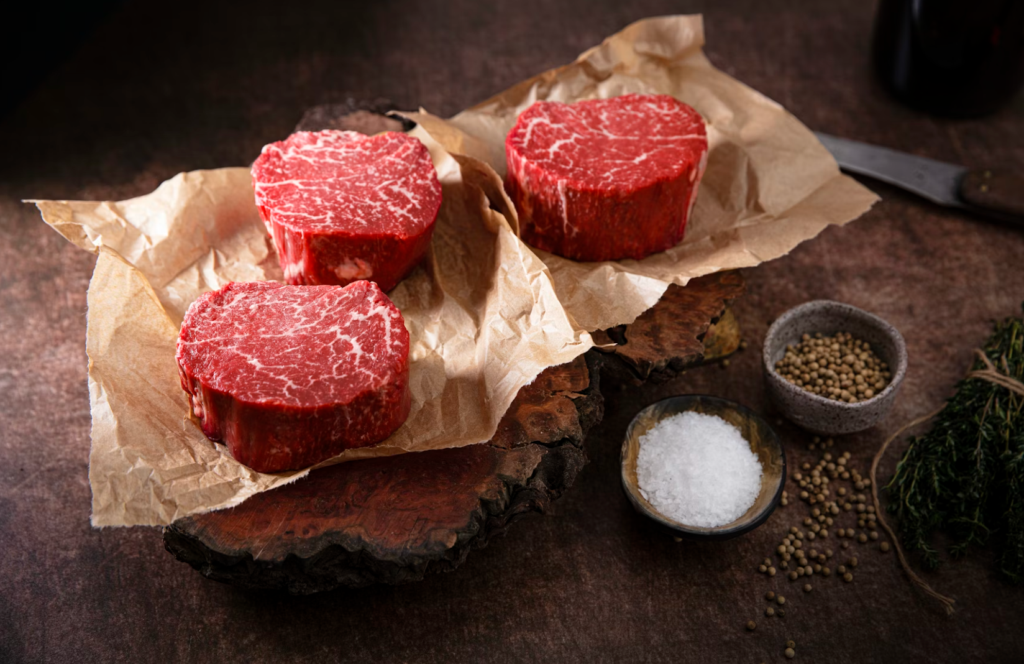
“Where’s the beef?” If you are old like me, you will remember the famous 1984 advertising slogan by the fast-food chain, Wendy’s. Actress Clara Peller uttered those famous words to criticize competitors for having small hamburger patties.
The phrase now has become a cultural phenomenon used to question the substance or content of products, ideas, or speeches. But more recently, I came across a comment from a student that her aunt and uncle said they had read a science book that warned that eating beef wasn’t good for the Earth. So, updating the question more than forty years later, let’s see “What’s up with beef?”
In the late 1960s, Dame Valerie Jane Morris Goodall, an English primatologist and anthropologist, stopped eating meat after realizing that meat symbolized the fear, pain, and death of animals in cruel factory farming. Even Albert Einstein noted that “Nothing will benefit human health and increase the chances for survival of life on Earth as much as the evolution to a vegetarian diet.”
In the Bible, the Torah also weighs in on meat eating, although with a more permissive tone. Leviticus 11 begins with the Lord speaking to Moses and Aaron regarding laws about animals for food. The Lord said, “Whatever divides a hoof, thus making split hoofs, and chews the cud, [is] among the animals that you may eat.” The Lord goes on to identify as unclean the camel, the SHAY-fan or rock hydrax, and the rabbit because though they chew cud, they do not have divided hoofs, and the pig, which has divided hoofs but does not chew cud. Deuteronomy 14 reiterates this but adds that edible animals include “the ox, the sheep, the goat, the deer, the gazelle, the roebuck, the wild goat, the ibex, the antelope and the mountain sheep.” Although not specifically mentioned, cattle qualify because they chew cud and have divided hoofs.
This is where the concern with beef begins. Animals that chew cud are called ruminants because the process of rechewing ingested, and partially digested, food to further break down plant matter and stimulate digestion is called rumination. Ruminants’ stomachs have four compartments—the rumen, which is the primary site of microbial fermentation; the reticulum, where further fermentation occurs; the omasum, which receives chewed cud and absorbs volatile fatty acids; and the abomasum, or the true stomach. The purpose of rechewing swallowed food is to break down particle size and enhance fermentation, which is crucial to the digestion process.
So, why are ruminants in general, and beef in particular, so bad for the environment? Environmental groups like the Humane League, PETA, and the United Nations have identified beef production as a major driver of environmental destruction due to five main issues: greenhouse gas emissions, land use and deforestation, water consumption, pollution, and biodiversity loss.
Grass is tough to digest. Therefore, ruminants have this four-compartment stomach that assists in allowing them to obtain nutrients from grasses. However, methane is produced from both orifices as a byproduct of the digestion process, and it also arises from manure lagoons as manure decomposes. Since methane not only is a greenhouse gas but also is more potent, per molecule, than carbon dioxide at absorbing thermal radiation, you can see why the beef industry would be targeted by environmental groups. Some even go so far as to argue that animal agriculture is more dangerous to the environment than all global transportation combined.
But why single out beef? Their argument is that cattle take longer to mature than chickens or pigs so that more feed is required. Thus, the emission of methane per pound of meat is much greater with cattle than with smaller animals. And, since they are generally large animals, beef production requires lots of space, which restricts land use and, in some areas of the world, leads to deforestation. Large animals also require more water per pound of meat, which is a concern in semi-arid pastures. Globally, opponents argue that beef requires twenty times more land and water per gram of protein than plant alternatives. And if you are raising beef cattle on large plots of land, biodiversity is likely to take a hit as well.
Then there’s pollution. Manure from farms can create algae blooms and dead zones in local rivers and estuaries. In the United States, livestock manure is a main source of waterway pollution. Nitrogen pollution in estuaries is largely driven by agricultural and urban stormwater runoff, which causes severe eutrophication (i.e., oxygen depletion).
So, maybe God permitted the Hebrews to eat beef, but you might be getting the idea that to save the planet and be good stewards of it, we should forgo it.
But as is usually the case, there are two sides to this discussion. Many researchers, farmers, and even some environmental scientists argue that the impacts of beef are overstated, the context is missing, and, in some cases, beef can be part of the solution to feeding the planet. So, let’s look at the other side.
Frank Mitloehner, an air quality expert at UC Davis, points out that the claim that “livestock are worse than transportation” is a myth. For much of the undeveloped and developing world, livestock are an integral part of their transportation network. Oxen and cattle are used to plow fields and carry goods, so where do livestock emissions end and transportation emissions begin? In the developed world, livestock emissions are near 4% overall, or about 1/7th of the emissions of either the transportation or the electricity sectors. Even if the United States adopted a fully plant-based diet, emissions would drop only by 2.6%.
We have been conditioned to think of carbon dioxide and methane as pollutants—substances we would be better off without and that shouldn’t be there naturally. Such a belief is fundamentally incorrect, as carbon dioxide and methane are an integral part of the natural carbon cycle. Think for a moment: In the grass that livestock eat, where does the carbon originate? Plants use photosynthesis to create sugars that contain carbon, hydrogen, and oxygen. The carbon in sugars comes from carbon dioxide in the atmosphere, so cattle are simply recycling carbon that was sequestered by plants. And methane naturally oxidizes into carbon dioxide and water over time.
Consequently, Mitloehner argues that we need to rethink the role of methane. Stable herds don’t add to the increase in methane in the atmosphere. Moreover, beef emissions of methane in the United States have dropped by 11.3% since 1961, while production has doubled. That has occurred thanks to efficiency.
While methane emissions from beef production are often the focus in climate discussions, their overall contribution to atmospheric warming is frequently overstated and does not pose an existential danger to human populations. Methane, primarily released through enteric fermentation in cattle, accounts for only about 3% of total U.S. greenhouse gas emissions and roughly 14-16% globally from all agricultural sources, with beef-specific contributions even smaller when considering the full lifecycle. Methane also has a relatively short atmospheric lifetime of around twelve years, meaning its warming effects are temporary. As Mitloehner argues, the biogenic carbon cycle is ignored: the carbon in methane from cattle originates from plants that absorbed carbon dioxide recently, creating a closed loop that doesn’t add net new carbon to the atmosphere.
Moreover, advancements in feed additives, breeding, and pasture management are already mitigating methane outputs from beef herds by up to 30-50%, without compromising food security. Alarmist claims about methane “endangering people” overlook that global warming projections incorporate all greenhouse gases, and even aggressive models from the IPCC show that eliminating livestock methane entirely would only reduce projected temperature rises by a fraction of a degree by 2100.But what about deforestation? Brazil often takes much of the heat for deforestation in the Amazon, but in the United States and Europe, land isn’t being cleared for beef production. In the United States, the number of cattle today is similar to the total number of cattle and bison combined back in the 1800s. Grasslands for grazing are often unsuitable for crops, so beef uses “marginal” land that would otherwise have produced nothing. With well-managed grazing strategies, the land is not destroyed and produces food that otherwise would not have been produced.
What about water usage? The water needs of beef cattle are offset by rainfall on pastures and thus irrigation isn’t required to produce it all. Canadian beef uses 17% less water now than it required 45 years ago, and in rainy climates like the United Kingdom, grass-fed beef doesn’t rely on imported feed or irrigation, so it requires less resources. Most critics say that the water needs of plants and vegetable farming are undercounted when including global supply chains.
Moreover, modern farms mitigate runoff with better manure management. Beef cattle grazing can actually enhance biodiversity on grasslands, thereby preventing overgrowth of a singular plant species. Thus, beef isn’t “killing the climate,” nor is it destroying the planet. But is there an advantage to eating beef, particularly grass-fed beef?
The answer to that question appears to be “Yes.”
Beef provides nutrition—and phasing it out could worsen inequality and health in developing areas. In particular, grass-fed beef offers several potential benefits across nutrition, health, environment, and animal welfare. Grass-fed beef tends to have a more favorable fatty acid profile compared to grain-fed beef as it often contains higher levels of omega-3 fatty acids—up to six times more in some analyses—which support heart health, reduce inflammation, and may lower risks of chronic diseases like heart disease and certain cancers. The omega-6 to omega-3 ratio is typically better with grass-fed beef aligning more with anti-inflammatory diets. It also has compounds like conjugated linoleic acid and elevated antioxidants, including vitamins A and E—sometimes up to four times higher—which are linked to potential benefits for cholesterol, blood pressure, and reduced diabetes and cancer risks. Grass-fed beef is generally leaner, with less total fat, fewer calories, and up to a third less saturated fat.
And contrary to popular belief, grass-fed beef also has environmental benefits. Well-managed grass-fed systems can promote soil health through natural grazing, which cycles nutrients via manure, reduces erosion, and enhances the biodiversity of pastures. Grasslands act as carbon sinks, sequestering carbon dioxide in soils—especially on marginal lands unsuitable for crops, thereby boosting food security. Reduced reliance on synthetic fertilizers, pesticides, and imported feeds lowers pollution risks. Animal welfare often improves with more natural foraging, space, and behavior while flavor profiles can be richer.
But in general, beef is a nutrient-dense food that provides high-quality protein along with a range of essential vitamins and minerals. It’s particularly valued for delivering nutrients that support muscle health, energy production, immune function, and more. A typical three-ounce serving of cooked lean beef (such as sirloin or tenderloin) offers roughly one-hundred-fifty to one-hundred-eighty calories and up to fifty percent of the daily value of protein for adults, while contributing under ten grams of total fat.
In addition, the main benefits of including beef in your diet are that it is a high-quality complete protein for muscle maintenance and growth, since it contains all nine essential amino acids in balanced amounts. It is an excellent source of highly bioavailable iron, which prevents iron-deficiency anemia, supports oxygen transport in blood, and boosts energy levels. Moreover, beef is rich in zinc, which provides immune support, wound healing, DNA synthesis, and maintaining healthy skin, hair, and nails. It also supports normal cognitive function, fertility, reproduction, and testosterone levels in men.
Beef is also one of the best dietary sources of cobalamin (vitamin B12), which is almost exclusively obtained from animal foods, and is crucial for red blood cell formation, nerve function, and preventing anemia. It also supplies riboflavin (B2), niacin (B3), pyridoxine (B6), and other nutrients that help convert food to energy, reduce tiredness and fatigue, and support brain function. Selenium acts as an antioxidant to protect cells. Phosphorus supports bone health and energy production. Beef also provides compounds like creatine (for muscle performance), carnosine and glutathione (for antioxidants), and L-carnitine (for fat metabolism and energy). Thus, beef is instrumental in bolstering the diets of underdeveloped and developing populations.
For older adults or those with higher protein needs, the nutrient density of beef helps meet requirements efficiently in smaller portions. In balanced diets, lean, unprocessed beef fits into heart-healthy patterns without significantly harming most lipid markers. Beef is often described as nutrient-dense because it packs substantial nutrition into relatively few calories—ideal for meeting needs without excess energy intake. Overall, beef can be a valuable part of a varied, balanced diet by providing hard-to-get nutrients efficiently, especially when choosing quality sources and not overconsuming.
So, eat beef or don’t eat beef—the choice is yours. But to pass on beef simply because you think you are saving the planet doesn’t appear to be a sensible choice.
Sources:
https://www.theguardian.com/environment/2023/may/03/five-beef-industry-myths-busted
https://clear.ucdavis.edu/news/yes-eating-meat-affects-environment-cows-are-not-killing-climate
https://www.beefresearch.ca/topics/environmental-footprint-of-beef-production